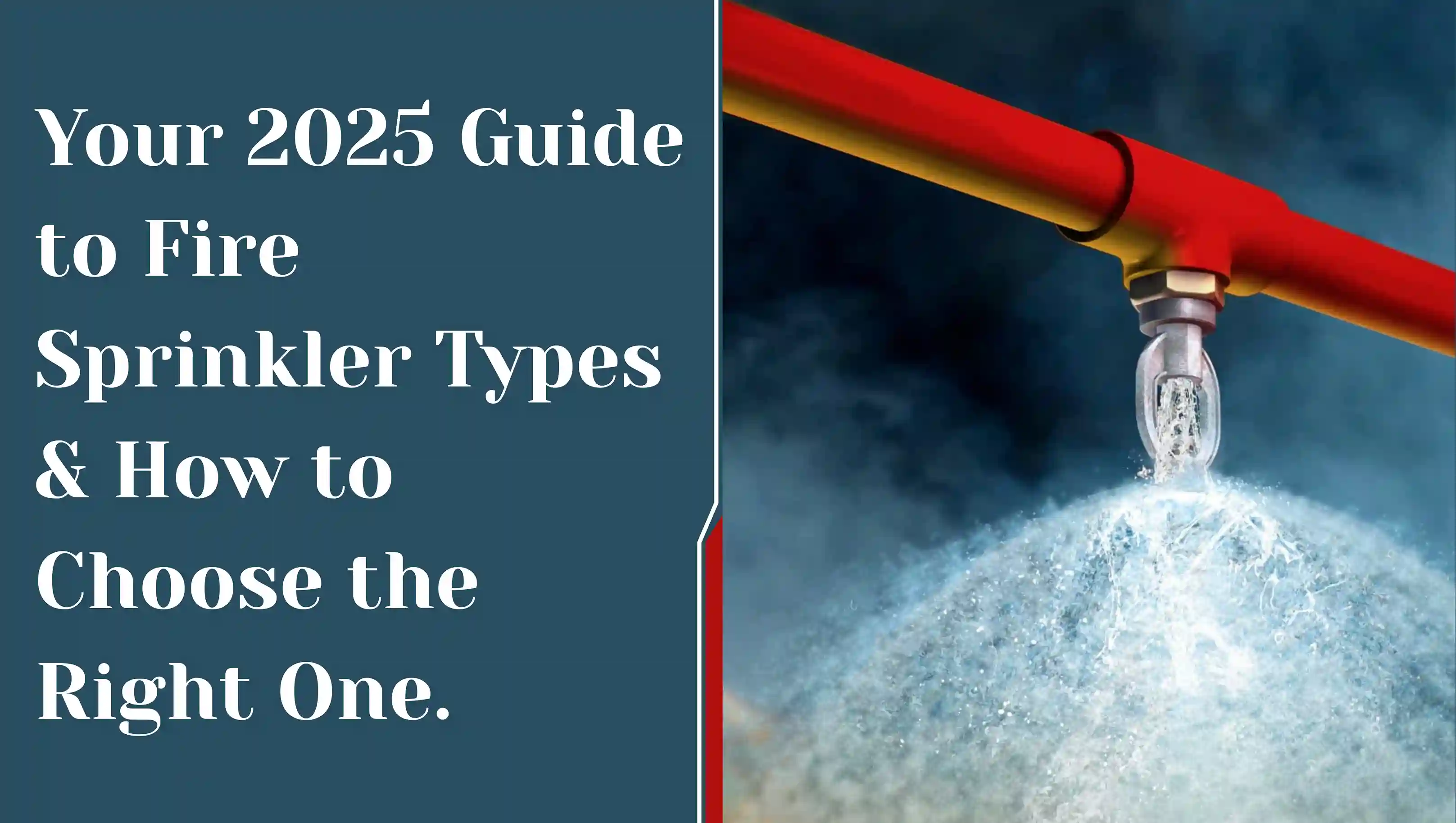
The Future of Fire Safety: 2025 & Beyond
The fire protection landscape is changing. In 2025, a fire safety system isn't just a requirement; it's an intelligent, critical infrastructure that protects your most valuable assets—your people, your property, and your operational continuity.
Choosing the right fire sprinkler system is arguably the most important decision a property owner will make. The best system for a corporate office is drastically different from the ideal system for a data center. Selecting the wrong one can lead to high costs, code non-compliance, or system failure.
Expert Guidance for the Modern EraAt Adhunik Firexperts, we’ve broken down the four primary types of fire sprinkler systems, explored advanced technologies, and provided a clear guide to help you determine the optimal fire defense strategy for your specific environment in the modern era of building intelligence and stringent codes.
I. The Core Four: Main System Types
Every water-based fire sprinkler system falls into one of these four primary categories.
1. The Wet Pipe Sprinkler System (The Industry Standard)
The Wet Pipe System is the most common, cost-effective, and straightforward fire sprinkler system in use today.
- How it Works: The piping is permanently charged (filled) with water under pressure. When a fire creates enough heat to reach the activation temperature (typically 135°F to 170°F), the heat-sensitive element breaks, and water discharges immediately.
- Best Used For: Commercial (Offices, Retail, Schools) and Residential (Apartments).
- Pros: Fastest response time, lowest cost, and simplest maintenance (NFPA 25 compliance).
- Cons: Not suitable for freezing temperatures; risk of accidental leaks.
2. The Dry Pipe Sprinkler System (The Cold Climate Solution)
Designed specifically to protect areas where the ambient temperature is not reliably maintained above 40°F.
- How it Works: Piping is filled with pressurized air/nitrogen. Water is held back by a dry pipe valve. When a head activates, air releases, the valve opens, and water fills the system.
- Best Used For: Unheated spaces like parking garages, loading docks, and exterior canopies.
- Pros: Eliminates frozen pipes; reduced water damage risk from minor leaks.
- Cons: Slower response time (trip time) and higher complexity/cost due to air compressors.
3. The Pre-Action Sprinkler System (The Asset Protection Solution)
The gold standard for high-value, water-sensitive assets. It requires a two-step activation process.
- How it Works: Pipes are filled with air. Step 1: Detection system (smoke/heat) activates valve. Step 2: Sprinkler head melts, releasing water.
- Best Used For: Data centers, server rooms, museums, and archival vaults.
- Pros: Maximum security against accidental discharge; targeted discharge.
- Cons: Most expensive and complex installation; maintenance intensive.
4. The Deluge Sprinkler System (The High-Hazard Powerhouse)
Designed for environments where fire spreads extremely fast, demanding instantaneous, full-coverage saturation.
- How it Works: All heads are open (no heat element). An external detection system triggers a valve that floods the entire zone simultaneously.
- Best Used For: Aircraft hangars, chemical plants, and power generation facilities.
- Pros: Maximum suppression and instantaneous full coverage.
- Cons: High risk of extensive water damage; overkill for standard buildings.
II. Beyond the Basics: Advanced Systems for 2025
The best system choice often involves modern variations driven by speed and water efficiency.
A. Early Suppression, Fast Response (ESFR)
- What It Is: A specialized wet pipe system for Early Suppression, not just control.
- Key Feature: Delivers higher water volume with larger droplets and momentum.
- Best Used For: High-piled storage warehouses and e-commerce fulfillment.
- Advantage: Eliminates costly in-rack sprinklers, allowing flexible layouts.
B. Water Mist Suppression
- What It Is: Discharges fine atomized mist instead of droplets.
- Key Feature: Efficiently absorbs heat and displaces oxygen.
- Best Used For: Cruise ships, museums, historical buildings.
- Advantage: Uses up to 90% less water, minimizing collateral damage.
III. The 2025 Trend: IoT & Predictive Maintenance
The biggest trend in 2025 is the integration of IoT (Internet of Things). Modern systems are being fitted with smart sensors connected to a Building Management System (BMS).
- Real-Time Monitoring: Instant alerts on pressure drops or leaks.
- Predictive Maintenance: AI algorithms predict component failure before it happens.
- Automated Compliance: Digital records simplify NFPA 25 compliance.
IV. Which System is Best for Your Building?
Comparing systems by Occupancy and Hazard Classification.
| Building Type | Hazard Level | Recommended System | Rationale |
|---|---|---|---|
| Corporate Office / School | Light Hazard | Wet Pipe | Lowest cost, fastest response. |
| Data Center / Museum | Light Hazard (Asset-Sensitive) | Double Interlock Pre-Action | Eliminates accidental water damage. |
| Unheated Warehouse / Garage | Ordinary Hazard | Dry Pipe | Prevents freezing pipes. |
| Logistics Hub | Extra Hazard Group 1/2 | ESFR System | Controls high-stacked commodities. |
| Chemical Plant / Hangar | Extra Hazard Group 2 | Deluge System | Rapid, simultaneous full discharge. |
The Final Step: Code Compliance
No matter the system you choose, these two factors are non-negotiable in 2025.
1. Adherence to NFPA 13
Design must match the calculated hazard level (Light, Ordinary, or Extra). Your system must be hydraulically calculated to deliver the precise density.
2. Lifecycle Maintenance (NFPA 25)
Regular Inspection, Testing, and Maintenance (ITM) is a legal responsibility. Partnering with a certified expert is the only way to ensure compliance.
Secure Your Building with Expert Fire Protection Solutions
Each facility has its own fire risks, so selecting the right sprinkler system starts with a proper evaluation. Our certified fire safety engineers assess your site, identify hazards, and recommend the most effective system to keep your building safe, reliable,and complete compliance for 2025 and beyond.